top of page
1897 madison team picture.png
Sep 23, 2022
8 min read

In 1934, Milwaukee Rufus King High School opened its doors and produced its first varsity football team in 1937. The school was named after a former resident of Milwaukee who was a Civil War general, the first superintendent of Milwaukee schools, newspaper editor for the Milwaukee Sentinel as well a diplomat. It was a fledgling program, and they didn’t play any other Milwaukee Public Schools their first year. Instead, they played a variety of schools and did quite well, going 3-1-3 under the head coach, George A. Wolf. I honestly don’t have any background on Wolf other than sparce info from the school yearbooks. Oh, if you might be thinking that the name sounds familiar, there was a George Woolf who was the main jockey of the great racing horse, Seabiscuit.

Rufus King from the 1941 school yearbook


Rufus King from the 1941 school yearbook


Wolf tutored the new classes each year as more students were added to the school. The freemen became sophomores and then juniors. They played an informal schedule each season between 1934 and 1936 against any school that had a JV, a Seconds or “B” squads. The players learned well. King was growing under the school’s principal, Ralph G. Chamberlin to whom the school’s first yearbook was decanted. Again, I can’t find additional info on Mr. Chamberlin except to surmise that he may have been related…a son of, possibly…to G. A Chamberlin who was, for many years, a teacher and football coach at Milwaukee East (Riverside) High School. G.A. was also a main cog in the WIAA as he served on that organizations Board of Control for 32-years.

It was Ralph Chamberlin who helped make sure that the school had a football stadium and not just a practice field. It was a glorious one that has now been relegated to holding track meets, football practices and some daytime JV games. In its heyday the stadium would host 10,000-12,000 fans for the school’s football games. The stadium was nicknamed “The Bowl of Victory”.


The 1937 season started with a 13-7 loss to Whitefish Bay but the next week the “Generals” trounced Menomonee Falls 20-0. They tied Milwaukee Marquette 13-13 and then followed up with a 14-14 tie of Sheboygan. Nearby Messmer was dispatched 27-0 and then they traveled to Port Washington and played to a 7-7 tie. The season finale was against Milwaukee Country Day (A school that later merged with Milwaukee University School, now located in Mequon. Country Day was located at the time in Whitefish Bay near today’s Dominican High School) in a 27-7 victory. Country Day was directed by Hall of Fame coach Kenneth Laard who won 195 games in his 40-years as a head coach. He also started coaching at Country Day after five seasons at Appleton and two at Bloomer in 1937.


George A. Wolf, 1948


1938 rolled around and the team went 5-2-0 with wins over Sheboygan, Shorewood and Marquette. They lost to a fine Oshkosh team and then they played the first Milwaukee City Conference teams. Boy’s Tech went down 26-0 and there was a close win over Custer, 6-0. The final game was against Milwaukee Country Day and their opponent was ready for them as the Generals lost a heartbreaker, 13-0. The season was a success for King and coach Wolf as he and his men looked forward to their introduction to the City Conference in 1939.


They played their first two games of the 1939 season against non-conference opponents and then there was the start of the conference schedule. In their first official conference game they defeated Milwaukee East. Next up was the battle for the conference title, even though it was only mid-season. The Washington” Puregolders” were the team to beat. I’ll leave it to you to read the details in my previous blog, “PLAYING THROUGH THE DEPRESSION…PART 2. The game was a battle and while King lost, they would end up in second place in the conference


Milwaukee was growing now as the city’s population swelled to about 625,000 souls as Word War II was about to grip the whole earth. George Wolf would coach until 1946. His 6-1-1 team of 1943 would place second in the conference. He would post seven winning seasons in his 10 years at King, and he left with a shining 45-24-7 varsity record. Wolf stayed on a few years working in the athletic department and coaching gymnastics. With the city’s growth a need for new high schools was pressing the city fathers. In 1937 when Rufus King played their first varsity football game there were nine other Milwaukee high schools: Washington, Lincoln, Bay View, Tech, East, Custer, South, North and West. Two more were not far behind in opening…Pulaski and Juneau.


As schools were added the landscape of Milwaukee began to change. There were clusters of people with different nationalities and race around the city. The south side was heavy with Poles and Germans. Closer to the downtown area there were many Italians and other European ethnic groups. On the near north side there were clusters of African Americans, many who moved north just before or during the war looking for a better life. There were few Hispanic and Asian-Americans at the time. But the landscape of people and faces were none the less changing. Post-World War II brought movement to the north lakeshore communities and the western suburbs. Coaching personalities in Milwaukee also changed. Gone, besides George Wolf, was Lisle Blackbourn from Washington. New coaches began to take other- city schools to new heights. Robert Neubauer took over at King and had moderate success, going 26-18-3 from 1947-52.


There was a downside to the Neubauer era. On November 20, 1949, tragedy occurred when starting quarterback Frederic “Fred/Fritz” Barthel died following the season ending 24-14 win over Custer. Very late in the game Barthel received a massive concussion and collapsed. He was rushed to Lakeview Hospital (Now Closed) as he suffered an internal hemorrhage. Surgery couldn’t relieve the pressure and he expired the next day, never waking up. Milwaukee Sentinel Sports Editor, Lloyd Larson eulogized Fred in the November 24 edition. That same day the Milwaukee Journal broke tradition when they named a 12-man squad, instead of 11-men, to the All-City 1st team. including Barthel as an addition to the squad. Much loved and honored by his fellow students, and fans. The King/Custer game was a day game, but Fred had volunteered to work the city championship to be held at Marquette Stadium between Pulaski and Bay View. He had turned down any payment, he was working for the fun of it. Kids around his home near Lindbergh Park on north 16th St. in Milwaukee (Now renamed Berrien Park) would flock to see Barthel when he walked by to ask him what was new in the sports world. Fritz’s picture was displayed in the school and the 1950 team vowed to win the Custer game in his memory. Alas, it was not to be as the Generals lost in the fourth quarter 14-6.


November 24, 1949, Milwaukee Journal


Neubauer’s final season, 1952, was his best as King and Washington tied for second in the city and the newest coaching star, Jim Richardson of Boy’s Tec who led the school to the city title. King and Washington went 7-0-1 as the two teams tied in the season’s final game 13-13 before 11,000 fans. Interestingly, Tech played a very close game against a middle of the road Pulaski team, only winning 14-13. King beat Pulaski 15-0 and Washington beat them 14-0. The coaching landscape continued to change as John Powers of Washington stepped down at the season’s end as head coach. He had been there during the glory years with Lisle Blackbourn as his trusted assistant for 11-seasons and then, when Blackbourn moved on Powers became the head coach for the next seven, winning two city titles. Tech had opened its doors 35-years before and had come close to winning the city title several times, but they fell short and finished in second place.


Stepping in to replace Neubauer would be a coach with little experience but surely learned his trade as a player, a collegian and as a pro. Walter “Wally” Dwyer played football at Milwaukee Washington for Lisle Blackbourn as a halfback and was the team captain in 1939.


I need to make a special note here. When I made my all-1930’s team as noted in my blog: PLAYING THROUGH THE DEPRESSION…PART 2 I accidently left Wally off the Honorable Mention list. That gave Washington, with fullback Pat Harder as the top player that season but they also had a fine halfback in Dwyer.


Following graduation Dreyer attended UW-Madison and played on the freshman team. He then was in the Marines reserves and the Corp transferred him to the University of Michigan for military training and while there he earned a letter as he played on the 1943 Big Ten champions, coached under College Hall of Fame Coach Fritz Crisler. From there it was off to service in the Pacific as he saw combat on Okinawa. Dreyer served three years in the military and then returned to Madison and played there from 1946-48, serving as the team captain his senior year. Following his play in the Blue-Gray All-Star game and then it was on to the NFL. He was drafted by the Chicago Bears and played one season before coach George Halas (Who was also the owner of the Bears) traded him to the Green Bay Packers. By now it was 1952 and Wally decided to retire from the NFL and took the head coaching job at Berlin H.S. before moving back to Milwaukee and taking the head coaching job at Rufus King. His first season was not a huge success as the Generals went from 7-0-1 in 1952 to 1-7-0 in 1953. He changed his assistant coach (Most teams in those days only had one assistant) for a man who would be very iatrical in Kings success. Richard “Dick” Krueger moved into the assistant spot and 1954 was a move into the right direction as the team improved with a 5-3-0 record.


At this point I want to make a mention about the 12-team City Conference in 1954: With 12-teams there was a 3-way tie for the City Championship. Boy’s Tech, Washington and South all finished with 6-1-1 records. Tech beat South but tied lowly Lincoln and lost to Bay View. South tied Lincoln and lost to Tech. Washington played to a tie vs. Bay View and lost to middle of the road Juneau. Crazy.


Things got better in 1955 for King as the team went 7-0-1 and won their first City Conference title. 1956 was also fine as the team went 7-1-0 for their second consecutive City title. The team lost a lot of key starters from the past two seasons but even, so they were 5-3-0 and placed second in the city. As I mentioned before the landscape in the city population wise was changing. For the first time, in looking at the school’s yearbooks, I noticed more and more African Americans attending King. The first players from that ethnic group appeared in the 1957 team photo. Earnest Jackson, John Triggs, Jim Weber and Sterling Gray may not have started but they all contributed to the team and would do so moving forward. The African American community had mainly attended Lincoln and North, but now more and more were more attending all the high schools in the city and that only helped all.

1958 the team went undefeated, going 8-0-0 as the Generals finished #3 in the United Press International football poll behind #1 Superior Central and #2 Waukesha. Louis Beauchamp, brother of future star Joe Beauchamp, was one of the stars of the team. 1958 made it three out of four seasons that King was #1 in the conference and even though they posted a 7-1-0 record in 1959 they could be proud of being #2 that year


Wally Dreyer 1958


Wally Dreyer left the school and became the head coach at the University of Wisconsin-Milwaukee from 1960—71 as well as being named an Assistant Professor of Physical Education. He held the assistant position until 1988 when he retired. While at King he posted a 40-16-1 record and was named to the WFCA Hall-of-Fame in 1993. Richard “Dick” Krueger stayed at King on and off until 1966. He spent time after the 1959 season as a Graduate Assistant at the University of Georgia and at UW-Milwaukee in 1961. He left King in 1966 and became the head coach at Milwaukee Madison where he won four city championships and three division titles in his 20-season’s. He posted an overall record of 168-86-1 as an assistant and head coach.


This is just the first part of the early Rufus King story.
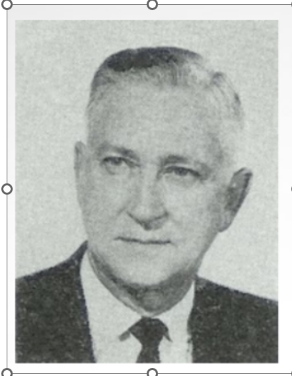
 

An Early Milwaukee City Conference Coach


In 1928 Bernie Heselton left his teaching and coaching position at Duluth (MN) HS and moved to Milwaukee to become the head coach at Milwaukee East (Riverside) and in doing so he made a name for the football program and himself. The school had previously been somewhat successful but never as strong as during his ten-year stay at East. The 1915 team had posted an 8-1-0 record, losing only to the Alumni, but despite the loss the state press felt that they were the top team over a 6-0-1 La Crosse. Conference titles were rare, but they still competed well in the city. Then Coach Bernie showed up.


Lisle Blackbourn came to Milwaukee Washington in 1925 to become one of the greatest City Conference coaches. Bernie Heselton arrived on the scene in 1929 and for the next 10 years the two schools battled for control of the city. It should be noted that it took Blackbourn until 1937 (12 seasons) to coach his first conference champion team while it took Heselton only three seasons to cop his first title. In the first two seasons Easy only posted a 5-11-1 record but then Heselton turned on the afterburners and in the next six seasons the team won 33 games, lost only one and tied three times as they had a 32-game win streak. His teams earned six conference championships in his 10-seasons, and he posted an overall 58-16-6 record. His Tigers beat Washington four times, lost one time and tied once. Because there were 8-10 teams in the conference as the city grew and more schools opened all teams played a rotating schedule, usually of 6-7 conference opponents and 1 or 2 non-conference foes.

WFCA Hall of Fame photo


Now, I admit I didn’t know about Heselton until I began to search some of the available school yearbooks at the Milwaukee Historical Society. When I got home, I did a GOOGLE search of the coach and came away impressed. Lawrence University came calling and he moved on to the collage scene where he then spent the next 27-years at the Appleton based University. His Lawrence teams would win six Midwest Conference championships and they finished in second place three times. Overall, he posted a 11-78-5 record. Late in his coaching career at Lawrence he also took the reins as the school’s Athletic Director, a position he held from 1961-1970. After he retired, he was honored in many ways. In 1981 he was named to the Wisconsin Athletic Hall of Fame, The Wisconsin Football Coaches Association Hall of Fame in 1982 and he was part of the inaugural class of the Lawrence University Athletic Hall of Fame in 1994. As a tribute to the rivalry between Ripon College and Lawrence University the Doehling-Heselton Trophy, awarded each year to the winner of the Ripon-Lawrence annual football game was created in 1994. Sadly, Bernie died in early 1981 and never learned of these awards. But awards weren’t what he was about. It was about the students and players with whom he came into contact. Just like my next profile.


A Jefferson Leader


Like Bernie Heselton, I had never heard of Carl J. Hager of Jefferson but digging through school yearbooks I learned a lot. Hager graduated from Jefferson High School and then moved on to attend the then named Stout Institute (Now UW-Stout). A star athlete at Jefferson as a high schooler, he returned to the school and served as the football and basketball coach and also acted as the school’s athletic director. And if that wasn’t enough, he taught what was then called manual arts (Now known better as shop). He was a master carpenter and specialized in desks, bookshelves and cabinets. The school doesn’t have copies available of the yearbooks for when Hager was a student so I couldn’t check his playing career. However, I was able to look at just about everyone beginning in 1920 his first year he returned to the school. And what a return it was.


1921 Jefferson High School Yearbook


His first football team tied in the season opener to Stoughton and then won the next seven. Finishing 7-0-1 in 1919 on the field his first basketball squad was not successful, posting a 3-9 record. He had moderate success coaching both sports. His 1922 team was only 5-7-0. Yes, that’s not an error. They played 12-games in one season before the advent of the playoff system in 1969 (By the WISSA). They were the first Wisconsin school to play 12-games in a season. That year they played Waterloo, Fort Atkinson, Cambridge, Lake Mills and Whitewater Normal HS twice each.


Speaking of Whitewater, did you know that a Normal school meant that it was a school that taught teachers? Most had kindergarten through, usually, sixth grade. Whitewater was different. Their teaching school had grades from K-5 to 12th grade. They had their own high school football team. It was never very good. The Whitewater College High School played Jefferson once as did the Whitewater Public School. I thought it was strange that Whitewater College had a high school in a town of about 3,500 people. By the way, the old Wisconsin High School was located in Madison on the UW campus which closed in 1964. Whitewater’s HS closed in the early 1950’s. Why the high school wasn’t in a larger city like Milwaukee nobody knows.


In 1924 Jefferson trimmed their football schedule as they went 6-0-0. Their next undefeated season was in 1939 as they went 7-0-0. Unfortunately, the cupboard was bare as the team went 0-7-0 the next season in 1940. Hager won six Rock Valley League titles in the 23 seasons that he coached football at Jefferson as he ended with an 88-77-4 record. He stopped coaching basketball in the 1940-41 season after 22 seasons. His final coaching season was 1941 as his team went 4-3-0.


At the start of the 1941-42 school year, he was relieved of his teaching duties as he took on the job of assistant principal. He was drafted into the Army after Pearl Harbor. He had been a lieutenant for his brief service in World War I and when he was drafted, he entered as a captain but eventually rose to the rank of colonel. When he returned from the war, he resumed his position of assistant principal and eventually he was promoted to principal. He retained that position until the 1962-63 school year. He passed in 1976 at age 81

Why did I track and mention Carl Hager? Because like Bernie Heselton, Mr. Hager was a teacher. His teams may not have always been the best but through his thoughtful encouragement he groomed his players and students to always be better. Hopefully the community hasn’t forgotten him for all he did.


Rock County


About the same time Bernie Heselton and Carl Hager were born, Herman L. “Honest Jake” Jacobson came into the word in Mt. Horeb. After graduating from Mt. Horeb HS, he attended Whitewater Normal in 1921 followed by attending and graduating from the University of Illinois in 1926. He would later obtain a M.S. degree from the University of Wisconsin in 1932. Between the U of Illinois and UW-Madison he coached football at Cuba City Wisconsin and took the school’s basketball team to the 1923 state tournament. He then went to coach at Monroe for two years. Next, he then spent five years as the football coach at Milbank South Dakota where he posted a 36-4-0 record in five seasons. After getting his final degree he took the head coaching jobs (Football, basketball and track) as well as the athletic director position at Beloit Memorial HS. He was a busy man and yet always concerned about others.


Starting in 1932 Jacobson spent the next 11 seasons as the football coach and posted an overall 66-46-5 career record. His Beloit football teams won two Big Eight Conference titles in 1933 and 1936 while tying for the title in 1938. On the basketball court his teams won the state title in 1933, 1934 and 1937 while placing second in 1935.

Coach Jacobson…Beloit High School Hall of Fame photo


An incident in the 1936 opening round against fellow Big Eight Conference member Kenosha shows his caring for others. Posting a 14-5 overall record, Beloit had split the two regular season games with Kenosha. Behind in that opening playoff round 27-13 at the end of the third quarter, the game had just resummoned with Beloit making a field goal when Fred Bauer, the Kenosha coach, suddenly fell from his chair on the sidelines, dead of a heart attack. After a long delay Jacobson conceded the game. It could have gone on, but he knew that the Kenosha players were unnerved, and his team might have been able to overcome the 12-point lead. But he also didn’t feel like continuing. He knew that if they had won it would have been a hallow victory. His concession drew wide praise. In those days the state tournament teams played additional games after they lost in the opening round and so Beloit went on and won the next game but went down in the third game of the loser’s bracket.


“Jake” retired from coaching in 1944 and his AD spot in 1946. At this time, he was appointed as Beloit’s Director of Recreation and Physical Education, a spot he held until 1966. While the director of the rec department he was appointed as a member of the Rock County Board of Supervisors, a job he held from 1961-82.

Among his many accomplishments Herman served on the WIAA Advisory Council. In the winter of 1945, he proposed a weekly poll of rating basketball teams in Wisconsin, similar to one that had been in use in Illinois to rate their high schools. It took on in the press and became popular. It would lead to the AP and UPI weekly football and basketball weekly polls. He was elected to the state basketball coaches association in 1979 (Although the school credit is listed as Eagle River and not Beloit…not sure why) as a charter member. He was enshrined into the Athletic Hall of Fame at UW-Whitewater in 1966 and was also named to the WFCA Hall of Fame in 1983. He passed in 1984.


Why These Three?


I had never heard of these three men. I ran across them in checking through yearbooks and expanded my search from there. I thought they were interesting, and I hope you find their accounts interesting as well.


Wisconsin Connections:


If you haven’t looked at the national posts by Kevin Askeland of MaxPreps.com check out his private blogs at High School Sports History | Kevin Askeland | Substack He does great, extensive research into creating past All-American and National Champion teams. Check them out. Wisconsin is mentioned in all of the stories.


Kevin also posted on MaxPfreps.com (His regular job) a story on the nation's Top 50 winningest active coaches. There are a few names besides Wisconsinites you may know: High school football: Top 50 winningest active coaches - MaxPreps


THE BEST GAME


There were several top games to choose from, but I picked the 1939 game between Milwaukee Washington vs. Milwaukee Rufus Kung in 1939. This season was all Washington as they rose to the top of City Conference and the top of the best teams of the 1930’s. King was a new school, playing their first regular season of varsity ball. They went 7-1-0 so they weren’t pushovers. Washington’s hopes for the title were nearly dashed as the Generals pushed the Purgolders around for most of the game. In the closing minutes of the game Pat Harder led the team back to win as he smashed through on a run up the middle for the winning tally. Harder took the team on his shoulders and scored all 16 of his team’s points in the 16-14 win. It had been an uphill battle as King took a 14-0 but with great blocking and defense Washington pulled the game out of the fire and would go on to take the title. Harder scored two touchdowns, kicked one conversion and a field goal and recovered a King fumble that led to his final score. For those who have purchased my book I had the game-by-game scoring for Harder slightly incorrect. I had him scoring only 10 points against King, but it was 16. I swapped his scoring with the Milwaukee South game by having him credited with the 16 points, but it was really 10.


THE BEST COACH


Tom Hearden put together one of the best decades of coaching in state history. Watertown’s Arnold Landsverk had a good one as well as his Goslings went 63-16-2 with three top teams and Delafield St. John’s Edison Lerch coached two top teams. This was also the decade that Lisle Blackburne of Milwaukee Washington was building a Milwaukee City Conference empire. But it was Hearden who was even better. Hearden graduated from Green Bay East in 1922 after playing on the great 1920 team as a backup to Jim Crowley. He followed Crowley to Notre Dame and was again backup to Crowley and then starter after he graduated following the 1924 National Championship season. Hearden started two seasons for the Irish and then played two seasons of pro ball for the Green Bay Packers with his former high school coach Curley Lambeau. Then in 1929 he played for the Chicago Bears, coached by George Halas but injuries cut his career short before he decided to go into coaching.


Tom Hearden


He spent four seasons at Racine St. Catherine’s and two more at Racine Park. His 1932 team went undefeated and won the Catholic Conference title as well as being the state Catholic school champions. In 1934 and 1935 he coached at Racine Park. 1936 saw him return to Green Bay East as the head coach. Louis E. Means had taken over from Chester Wiley in 1930 and ended 1935 with a four-game win streak. Hearden extended that streak to 36 games as he did not lose a game at Green Bay East until the season finale against Green Bay West in 1939. At the time, this was the longest winning streak in state history. Hearden would go undefeated the next two seasons as well, posting a 7-0-0 record in 1940 and a 6-0-2 record in 1941. In seven seasons at East, Hearden posted a 51-3-2 record, winning or sharing six Fox River Valley Conference titles. His overall high school coaching record was 85-11-18 in eleven seasons with four state titles. He was a charter member of the Wisconsin High School Football Coaches Association Hall of Fame.


It’s sort of interesting that Hearden and Lisle Blackbourn would sort of cross paths in the 1950’s. Blackbourn had been the head coach of the Green Bay Packers and hied Hearden as an assistant. Blackbourn was let go in 1957. Instead of hiring Hearden after he had suffered a stroke, they went with Scooter McLean who only lasted one season before they hired Vince Lombardi.


THE BEST PLAYERS


bottom of page